
THE AUTHOR:
Tiffany Lam, Strategic Communications and AI Ethics Officer at Jus Mundi
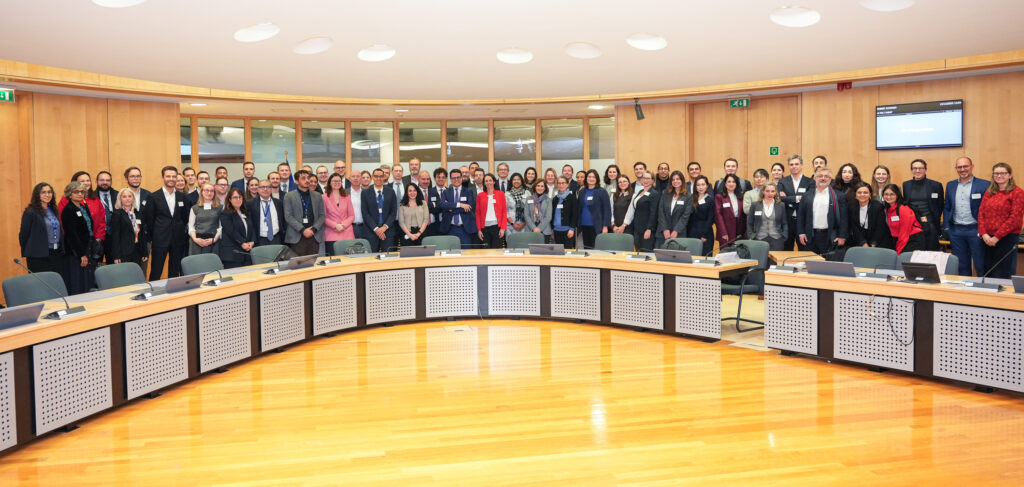
On 15 December 2025, the AI Office of the European Commission hosted a milestone event in Brussels to mark one year of the AI Pact, a voluntary initiative designed to bridge the gap between the present and full implementation of EU AI Act measures. Among the attendees were organisations that have been at the forefront of responsible AI development, including Jus Mundi, which joined as an early signatory alongside companies such as Ikea and IBM.
The event brought together industry leaders, policymakers, and AI practitioners to take stock of progress, share learnings, and address the challenges that lie ahead.
The AI Pact by the Numbers: A Year of Progress
Elinor Wahal, Coordinator of Stakeholder Interaction – Artificial Intelligence Regulation and Compliance of the AI Office, presented the achievements by AI Pact pledgers. What began with early signatories has grown into a substantial movement. As of December 2025, the AI Pact encompasses 3,265 organisations, with over 200 voluntary pledgers who have committed to concrete actions ahead of legal deadlines. The pledger community reflects diversity: 63 percent based in the EU, 23 percent from the United States, and 14 percent from other regions worldwide. New signatories continue to join, reflecting growing recognition that early preparation creates value beyond mere compliance.
All pledgers have committed to three core actions:
- Adopting an AI governance strategy;
- Mapping high-risk AI systems; and
- Ppromoting AI literacy within their organisations.
Notably, over 50 percent of signatories have gone beyond the mandatory commitments, taking on additional voluntary measures such as reinforcing human oversight, improving risk mitigation processes, and increasing transparency around AI-generated content.
The European Commission’s AI Office has received 105 detailed reports from signatories outlining their implementation journeys, challenges encountered, and progress achieved.
Key Insights from the AI Pact Anniversary Event
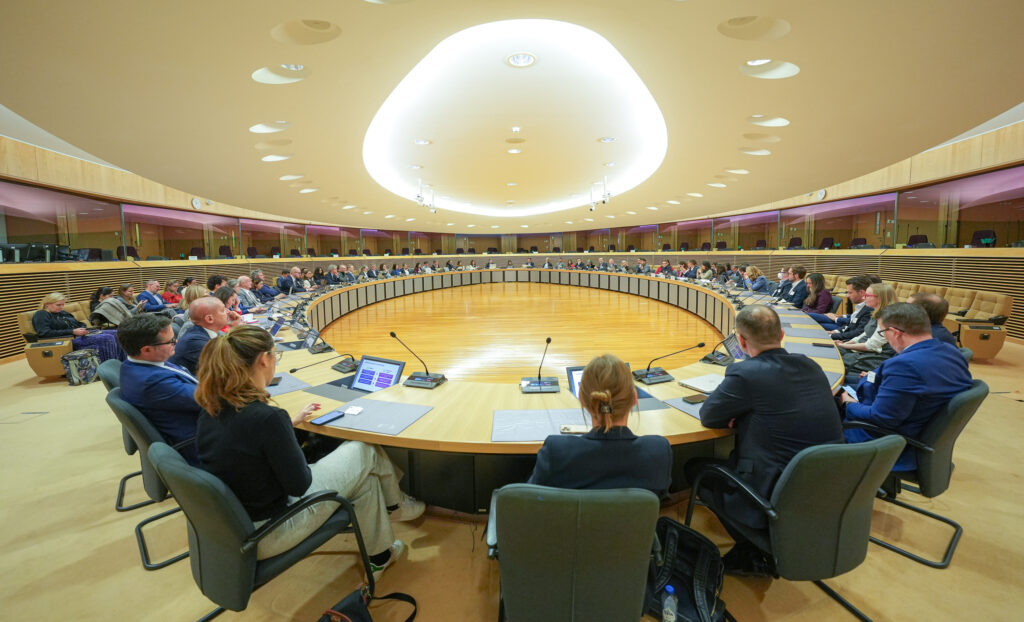
The December event brought together representatives from the European Commission, pledger companies, and stakeholders to discuss both achievements and ongoing challenges.
Thierry Boulangé, Acting Head of Unit – Artificial Intelligence Regulation and Compliance of the AI Office, presented the ongoing preparation for implementation of the AI Act, as well as simplification measures for compliance.
In the open discussion, one of the most striking insights came from the area of AI literacy. Attendees emphasised that providing AI tools without adequate training delivers only a fraction of the potential value. Research from the London School of Economics and Political Science (October 2025), mentioned during the discussion, found that employees using AI tools alone gained approximately five hours per week in productivity. However, when those same tools were paired with proper training, productivity gains jumped to eleven hours per week, more than double the impact. Beyond productivity, AI literacy is fundamentally about inclusion and ensuring AI’s benefits are distributed broadly.
Companies reported that building on existing foundations proved particularly effective. Many organisations leveraged their GDPR compliance teams, privacy capabilities, and cybersecurity infrastructure to tackle AI Act requirements. Multi-disciplinary teams proved essential for effective AI system mapping and risk assessment, whereas larger organisations actively supported startups and SMEs by sharing expertise, tools, and frameworks.
While timeline pressures and the need for clearer guidance remain concerns, the collaborative spirit of the event demonstrated that organisations are committed to working together toward practical implementation solutions.
Jus Mundi’s Commitment to Responsible AI Development
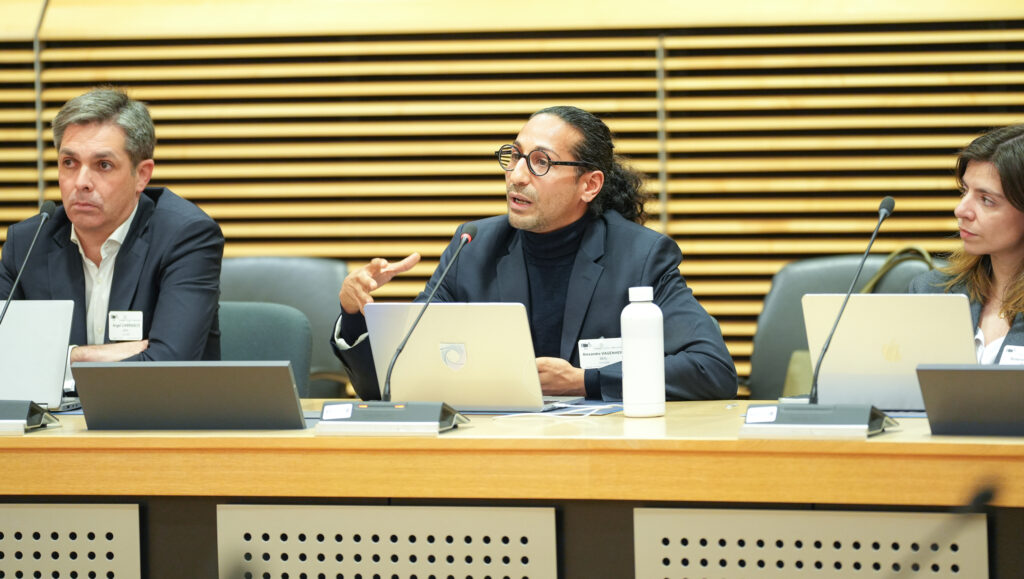
Jus Mundi’s participation in the AI Pact reflects a deliberate commitment to responsible AI innovation that aligns with both our mission and the evolving regulatory landscape. Representing Jus Mundi at the event were Alexandre Vagenheim (VP of Global Legal Data), Solène Bedel (Head of Legal), and Tiffany Lam (Strategic Communications and AI Ethics Officer).
As one of the early signatories, we recognise that preparing for the AI Act was not only about compliance but also a step towards ensuring that our AI development embodies the principles of transparency, accountability, and trustworthiness that the legal profession demands.
Jus Mundi also recognises that AI literacy extends beyond our internal teams to the legal community we serve. Through various partnerships, we support training and education to help legal professionals, academics, and practitioners understand how to use AI effectively.
Looking Ahead
The AI Pact’s first year demonstrates that early preparation for AI regulation creates value beyond compliance. As the initiative continues through 2026 with further guidance and collaborative opportunities ahead, the anniversary event underscored a shared commitment to responsible AI development across industries.
Jus Mundi remains actively engaged in these discussions, contributing to an ecosystem where AI innovation in legal technology aligns with the principles of transparency, accountability, and trustworthiness that the legal profession demands.
About Jus Mundi
Founded in 2019 and recognized as a mission-led company, Jus Mundi is a pioneer in the legal technology industry dedicated to powering global justice through artificial intelligence. Headquartered in Paris, with additional offices in New York, London, and Singapore. Jus Mundi serves over 150,000 users from law firms, multinational corporations, governmental bodies, and academic institutions in more than 80 countries. Through its proprietary AI technology, Jus Mundi provides global legal intelligence, data-driven arbitration professional selection, and business development services.

*The views and opinions expressed by authors are theirs and do not necessarily reflect those of their organizations, employers, or Daily Jus, Jus Mundi, or Jus Connect.