
ICC YAAF Event, 9 September 2025
THE AUTHOR:
Raoul J. Sievers, Research Assistant at ArbBoutique
On 9 September 2025, the arbitration community gathered early for an ICC YAAF event held in conjunction with the Berlin Dispute Resolution Days. Moderated by Marie C. Grüger (Spangenberg), panelists Inga Witte (CMS) and Ricardo Gomes (Hannes Snellman) shared perspectives on how arbitral tribunals and counsel deal with defaulting parties in arbitration.
The Tribunal’s Perspective
After words of welcome by ICC YAAF representative Dr Ole Jensen (ArbBoutique) and Dr Martin Mengden of the event’s host Raue, the conversation commenced with an introduction by moderator Marie C. Grüger. She began by noting that arbitral institutions generally do not collect statistics on defaulting parties. However, Grüger added, instances where one party decides not to participate in the proceedings occur more often than one might expect given the consensual basis of an arbitral proceeding. Against this backdrop, the panel set out to discuss the deceptively simple question of what constitutes a “defaulting party.” Instances of default are multifaceted, encompassing both a complete absence from the outset and a withdrawal at later stages. Gomes described the different types of non-participating parties: those who never respond to a request for arbitration, those who disengage along the way, and the “cliffhangers” who keep everyone guessing but ultimately fail to appear. As Witte added, some parties only make an appearance at the hearing itself.
The panel then turned to one of the key differences between arbitration and court proceedings. As Grüger noted, unlike many state courts (including those in Germany, Switzerland, France, and the UK), arbitral tribunals cannot simply issue a default judgment. Witte stressed that a tribunal must always strike a balance between moving the case forward efficiently and ensuring the absent party has had proper notice and a fair opportunity to be heard. This balance is of particular significance, since a failure to ensure proper notification and respect for the respondent’s right to be heard may expose any award to annulment or refusal of enforcement under Article V(1)(b) of the New York Convention (1958) (C. Salomon & F. Loibl, Respondents’ Non-Participation in International Arbitration: A Practical Analysis for Claimants and Tribunals, 30 Am. Rev. Int’l Arb. 441 (2019), at p. 447). Gomes pointed to the lex arbitri as providing guidance on the necessary steps to be taken to safeguard the defaulting party’s right to be heard.
The speakers also highlighted the tribunal’s role in actively testing the claimant’s case to ensure the enforceability of the award. Both Witte and Gomes emphasized the fundamental role of oral hearings (even brief or remote hearings) for arbitrators to probe the case. This again goes back to the fact that, unlike in many domestic litigation systems, arbitral tribunals cannot treat the respondent’s silence as an admission of the claimant’s case; rather, tribunals are obliged to satisfy themselves that the claims are well-founded (see also N. Bassiri, Devil’s Advocate – Counterintuitive? – What, Why and Who Is The Devil’s Advocate in Default Proceedings?, in D. De Meulemeester (ed), Default in Arbitration (2022), 79, at 99). At the same time, Grüger highlighted that tribunals should be minded not to overstep by filling in as “free counsel” for the defaulting party.
Institutional rules and support were considered valuable, with the ICC’s vast experience cited as particularly helpful. Witte emphasized the need to carefully document every step taken to notify the defaulting party. A well-drafted award, which records these efforts in detail, can be decisive if the award is later challenged. Indeed, best practice dictates tribunals to maintain meticulous evidentiary records of all notifications and to extend repeated invitations for participation (see also C. Salomon & F. Loibl, How to Respond to Respondents’ Non-Participation, 264 N.Y. L.J. 28 (2020), at 2).
Counsel’s Perspective
As regards the counsel perspective, practical issues around notification, ranging from email confirmations to registered mail, were discussed, with Witte, again, underlining the importance of documenting every attempt. In the absence of strict service requirements under most institutional rules, practitioners often adopt hybrid methods of notification, combining courier, electronic communication, and even personal delivery, to align with both the law of the arbitral seat and the requirements of potential enforcement jurisdictions. Both Gomes and Witte shared their experiences with opposing parties’ attempts to frustrate proper notice and recounted their creative efforts in commencing the proceedings (including procedural orders being brought to the home jurisdiction of the opposing party in suitcases and then hand-delivered by a domestic courier, which Gomes described as “PO smuggling”).
The conversation also touched on strategic aspects. Gomes suggested that counsel for the participating party should anticipate possible defenses and address them proactively. With respect to advising parties whether they should default, he cautioned that refusing to participate in an arbitration is not typically a good idea. He mentioned that there may, however, be very specific situations where a “soft default” may be considered, such as abstaining from a specific hearing or a procedural conference where a party contests the tribunal’s jurisdiction.
Upon a question from the audience, both Gomes and Witte further discussed how interim measures or emergency arbitrator proceedings might be used to bring reluctant parties to the table. In some cases, receiving service of court documents might make more of an impression on parties than corresponding with an arbitral institution or tribunal. The speakers noted, however, that state courts are not often used as a means to convince non-participating parties to get to the table.
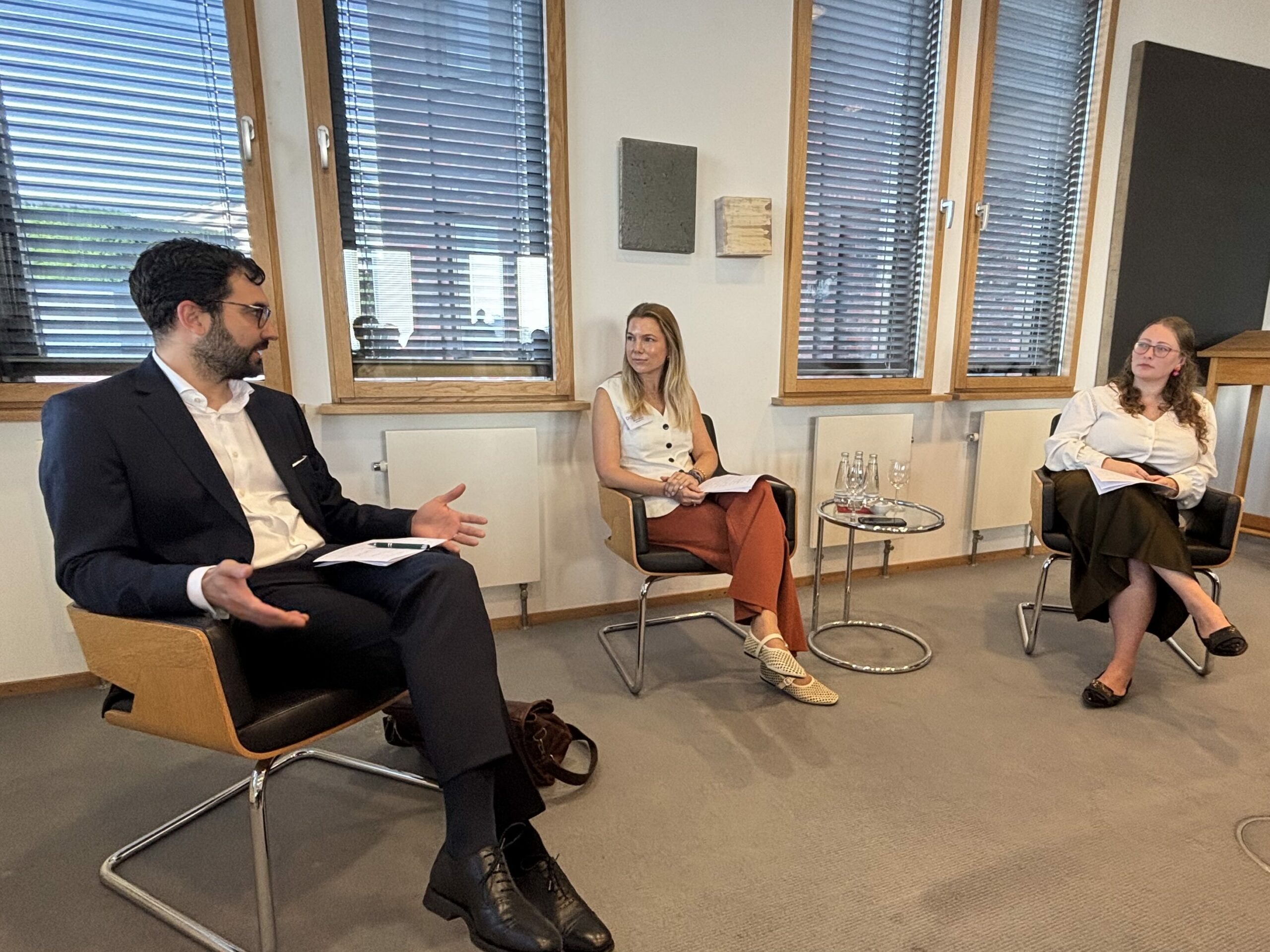
Overall, the discussion made clear that defaulting parties – whether absent from the outset, dropping out along the way, or only appearing at the hearing – pose significant challenges for arbitral tribunals and counsel alike. Witte and Gomes highlighted the importance of striking a balance in moving the case forward, while making sure the absent party has a fair chance to be heard, showing how careful documentation and creative notification strategies can make all the difference. After all, in the interest of the legal enforceability of the award, counsel and the tribunal must make sure that a defaulting party, despite being absent, is not forgotten.
ABOUT THE AUTHOR
Raoul J. Sievers is a research assistant at ArbBoutique. He is a PhD candidate at Humboldt University, specializing in international arbitration, and holds an LL.M. in International Commercial Arbitration Law from Stockholm University. He previously served as a visiting professional at the SCC Arbitration Institute and worked with the international arbitration team at Freshfields in Germany.
*The views and opinions expressed by authors are theirs and do not necessarily reflect those of their organizations, employers, or Daily Jus, Jus Mundi, or Jus Connect.