This article was featured in Jus Mundi‘s 2025 Arbitration Year in Review, an annual publication analyzing arbitration developments across 40+ jurisdictions on 6 continents. This edition brings together young practitioners and senior experts to capture the year’s most significant legislative reforms, enforcement trends, and institutional innovations.
THE AUTHORS:
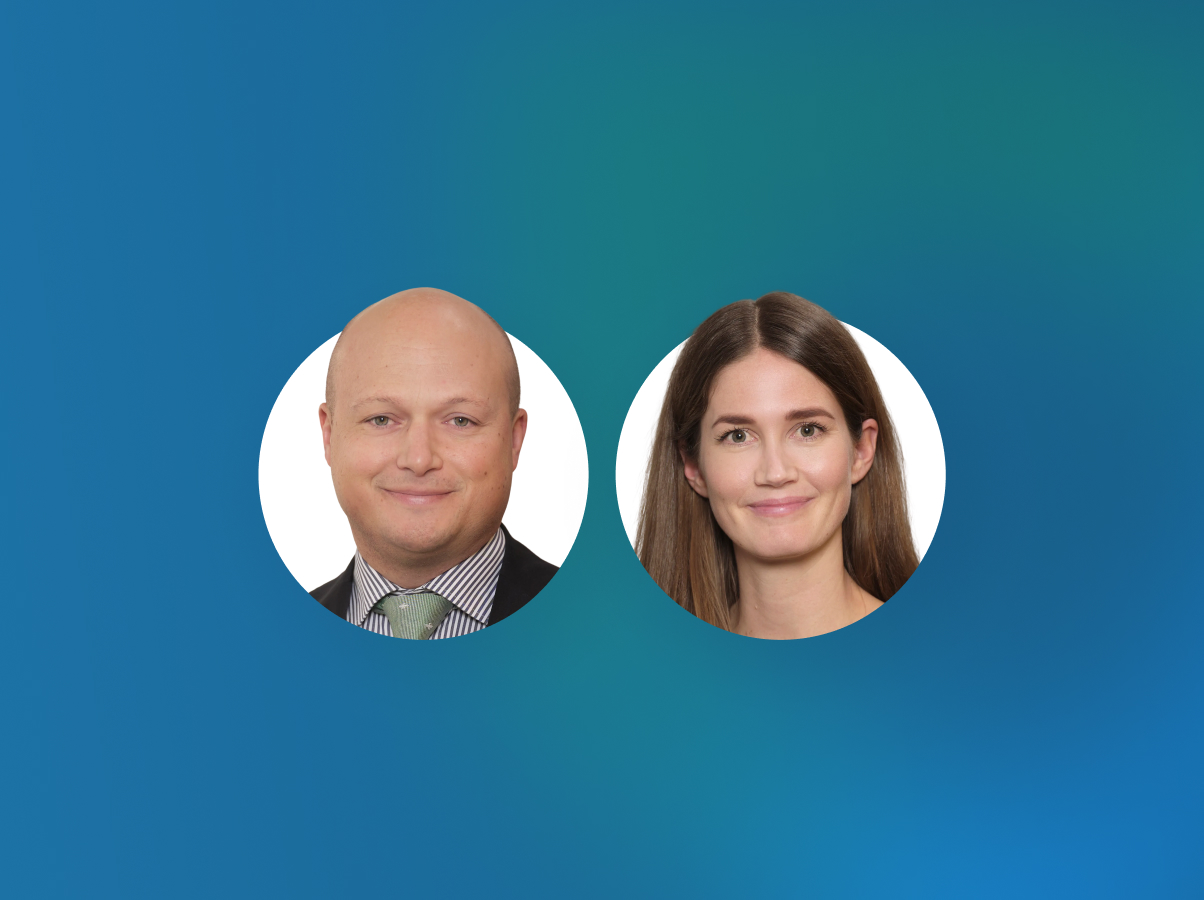
Jerker Kjellander, Heads of Dispute Resolution Group, Vinge
Cecilia Cronqvist, Senior Associate, Vinge
Markus Hedbys, Associate, Vinge
In 2025, the efforts continued to further strengthen Sweden’s position as an attractive and stable destination for international dispute resolution, through both institutional initiatives and court decisions reinforcing the principle of arbitral finality.
Developments in Commercial Arbitration During 2025
The SCC Arbitration Institute (“SCC”), which for many years has been among the leading global arbitral institutions, this year further strengthened its position by establishing the SCC Council for Swedish Arbitration. The background to the initiative was the positive development of the number of international commercial disputes that Sweden has seen in recent years, as well as their diversification. The council consists of 15 Swedish lawyers, with extensive experience in international arbitration. The purpose of the council is to further strengthen the already strong position of the SCC and ensuring that Sweden remains an attractive seat for international dispute resolution.
On 11 March 2025, the Nordic Commercial Arbitration Forum held its inaugural conference which gathered practitioners, academics and institutional representatives. The ambition is for the forum to be a biannual platform to showcase the Nordic region as a strategic venue for international arbitration. The program emphasized the Nordic legal family’s shared concepts, arguing that the region functions as a de facto domestic market for commercial and contract law. A core message was that parties can confidently appoint neutrals from neighbouring Nordic jurisdictions because of common legal foundations and that the region’s institutions collectively support efficient, business‑oriented dispute resolution. The next forum is planned for Oslo in 2027.
In other notable news during 2025, the Swedish Supreme Court clarified when an award can be declared partially invalid based on ordre public. Further, the Swedish Svea Court of Appeal reiterated the general courts commitment to the principle of finality in arbitration, illustrated by the court’s reluctance to reassess a tribunal’s evaluation of the merits or to interfere with costs allocation. It also demonstrates that Swedish courts will only set aside an award if there has been a procedural irregularity that likely affected the outcome of the case and illustrates the circumstances under which an award may be partially set aside. The developments of Swedish case law during 2025 will be further elaborated on below.
SCC Casework Statistics
Reports from the SCC, including the SCC’s summarized and currently available statistics of caseload, highlight specific and current trends in Swedish arbitration. The SCC has as of the date of this article not yet published its statistics for 2025, however the statistics from 2024 shows clear and positive trends for the arbitral landscape in Sweden.
In 2024, the SCC registered 204 new cases with an almost even split between international (51 %) and domestic disputes (49 %). 53 % of the filings made to the SCC were handled under the SCC Arbitration Rules, while 35 % of the filings were handled under the SCC Expedited Arbitration Rules (2023). The SCC also handled 13 ad hoc services, 5 cases under the SCC Mediation Rules (2025), 4 Emergency Arbitrator proceedings, as well as one application for SCC Express Dispute Assessment (2023) (which is a dispute resolution service where a legal expert assesses the dispute within three weeks at a fixed price). The disputed amount in total at the SCC reached roughly EUR 13.5 billion, with an average just over EUR 100 million in the disputes administered under the SCC Arbitration Rules, while expedited cases averaged about EUR 672,000. These figures highlight both the SCC’s and Sweden’s role in resolving large and complex commercial matters.
The disputes brought to the SCC in 2024 originated from many different types of contracts. The most common were disputes arising out of business acquisitions (i.e., M&A-related), delivery and transportation agreements, as well as purchase agreements. By industry, the busiest areas were retail and consumer products, financial services, and real estate/construction, indicating sustained momentum in post‑M&A disputes and construction cases.
Challenging Arbitration Awards in Sweden
Introduction
In Sweden, arbitral awards are final, and the Swedish Arbitration Act (the “SAA”) does not allow any appeals on the merits. Review is available only through challenge proceedings. Under Section 33 of the SAA, an award is invalid if the dispute is not arbitrable under Swedish law or if the award conflicts with Swedish public policy. In addition, an award may be set aside under Section 34 of the SAA in case there is no valid arbitration agreement, the tribunal exceeded its mandate, the arbitration was conducted in Sweden contrary to the parties’ agreement, an arbitrator was improperly appointed or disqualified, or a procedural error occurred that likely affected the outcome.
Challenge proceedings must be brought before the competent court of appeal within two months of receipt of the award. The court’s review is limited to the abovementioned statutory grounds.
A very small portion of arbitral awards are challenged in Sweden. An average of around 19 arbitral awards are challenged in Sweden yearly, according to the Westerberg Arbitration Tracker 2025. Out of the 357 initiated and decided cases between 2004 and 2024, the award was wholly or partially set aside or annulled in only 28 cases. This represents 7.84 % of all challenge cases decided 2004-2024. Statistically, this is an increase from previous years but mainly attributable to the annulment of five awards due to the prohibition to arbitrate intra-EU investor-state disputes. If these cases are excluded, the share of successful challenges to arbitral awards would instead amount to 6.53 %.
Case Law Highlights
In 2025, two decisions of the Swedish Supreme Court addressed severability and the circumstances under which Swedish courts may grant partial relief in challenges to arbitral awards. In the case called Blue Gas Holding, the Supreme Court confirmed that invalidity under Section 33 of the SAA can be confined to part of an award and articulated a structured two-step test: the court must first isolate the part of the award actually affected by ordre public and then decide whether the unaffected part can stand without creating incoherent or unfair res judicata effects. Applying that logic to an Energy Charter Treaty 1994 (“ECT”) award involving EU and non‑EU investors, the Swedish Supreme Court held that the intra‑EU segment was tainted by procedural ordre public, but the remaining part concerning a Swiss investor was severable and remained valid, including the related costs orders.
In the second case, called Rydbergs, the Swedish Supreme Court addressed a partial set‑aside under Section 34 of the SAA. While accepting that the sole arbitrator exceeded the mandate by relying on a factual premise not pleaded by any party, the Supreme Court overturned the Court of Appeal’s partial annulment. According to the judgment, a payment dispute of this kind was indivisible for res judicata purposes and leaving part of the award standing would have blocked any meaningful re‑hearing of the part of the arbitration which was challenged. Accordingly, the award was set aside in its entirety.
Another highlight in case law during 2025 was the Svea Court of Appeal’s judgment T 10465-23 in the so-called Mall of Scandinavia case. The dispute arose out of an SCC arbitration between a Swedish construction group (“Peab”) and a subsidiary of a French real estate group (“Rodamco”) concerning the construction of a shopping centre. Peab requested additional payment, and Rodamco requested, among other things, damages and a penalty for delay in the work. In the award, the tribunal partially upheld both parties’ claims. Rodamco challenged the award before the Svea Court of Appeal, alleging numerous errors amounting to both excess of mandate and procedural irregularities. In its judgement, the Svea Court of Appeal partially set aside the award concerning a contractual penalty claim for late completion, which a two-to-one majority in the tribunal awarded only partially to Rodamco. According to the court, the majority of the arbitral tribunal had failed to properly consider all of Rodamco’s arguments in relation to that claim, thereby committing a procedural irregularity that likely affected the outcome. The court further determined that this part of the award could be meaningfully separated from the remainder, which should be upheld as not affected by this error.
The Svea Court of Appeal reached a similar conclusion in its judgment T 540-23 regarding the award in Gasum v.Gazprom Export. The award concerned a gas supply contract between state-owned gas companies Gasum Oy (“Gasum”) and Gazprom export LLC, where Gasum was seeking (among other things) to be released from the obligation to purchase minimum annual quantities for 2020 and 2021. Gasum challenged the award before the Svea Court of Appeal, primarily seeking the partial setting aside of the award on the ground that the tribunal had failed to assess Gasum’s separate claim that the contractual clause imposing minimum annual purchase obligations was invalid under EU competition law.
The court held that the arbitral tribunal had failed to assess the minimum purchase obligation in relation to Article 101 of the Treaty on the Functioning of the European Union and thereby had exceeded its mandate pursuant to Section 34 of the SAA. The court considered the tribunal’s failure to examine a claim relating to a mandatory provision of EU law to be particularly serious, and found that the lack of reasoning in this respect constituted a serious disregard of due process. Therefore, the court presumed that the excess of mandate had affected the outcome of the case and set aside the relevant parts of the award.
Further, the Svea Court of Appeal in its judgments T 13423-24 and T 1729-25 regarding the awards in “NTG Multimodal GmbH v If Skadeförsäkring AB” set aside the two SCC awards and declared that the arbitrator lacked jurisdiction. The dispute arose from a Sweden–Italy road carriage framework agreement subject to the Convention on the Contract for the International Carriage of Goods by Road (1956) (“CMR”). Although the contract contained an SCC arbitration clause and referenced Swedish law and the CMR generally, the clause did not expressly state that the arbitrator should apply the CMR as required by Article 33 of the CMR. The court concluded that neither a general choice of Swedish law nor a broader incorporation of the CMR elsewhere in the contract satisfied Article 33 of the CMR. The arbitration agreement was therefore invalid, and the court declared that the arbitrator lacked jurisdiction over the dispute.
Conclusion
The developments in Swedish international arbitration throughout 2025 reaffirm Sweden’s position as a leading arbitration destination, where international disputes continue to represent approximately half of the SCC caseload. Key takeaways from 2025 include the Swedish courts’ ongoing commitment to the principle of finality in arbitration, the national courts’ willingness to intervene only in cases of clear procedural irregularity, and their careful approach to partial annulment of awards. Looking ahead, Sweden’s arbitration framework appears well-equipped to address the evolving needs of international disputes, balancing finality and fairness while ensuring that parties can rely on an efficient dispute resolution process.
Discover more insights into the latest developments in arbitration in 2025 from around the world now
ABOUT THE AUTHORS
Jerker Kjellander heads Vinge’s dispute resolution group in Skåne. He specializes in commercial arbitration and litigation with particular experience in construction disputes, disputes related to M&A and the energy sector. Jerker acts as both counsel and arbitrator in domestic and international arbitral proceedings with experience from disputes handled according to, among others, the SCC, ICC, LCIA and DIS rules. He is a member of the board of the Swedish Bar Association, the executive committee of the Swedish Arbitration Association, is the president of the Arbitration Association of Southern Sweden and member of the SCC Council for Swedish Arbitration.
Cecilia Cronqvist is a senior associate in Vinge’s dispute resolution group in Skåne. Cecilia specializes in commercial arbitration and litigation with particular experience in construction disputes and the energy sector. Cecilia acts as counsel in domestic and international arbitral proceedings with experience from both ad hoc proceedings and disputes handled under the SCC and DIS rules. She is a member of the Swedish Bar Association.
Markus Hedbys is an associate in Vinge’s dispute resolution group in Skåne. Markus specializes in commercial litigation and arbitration with particular experience in IP related disputes, as well as matters concerning real property.
*The views and opinions expressed by authors are theirs and do not necessarily reflect those of their organizations, employers, or Daily Jus, Jus Mundi, or Jus Connect.