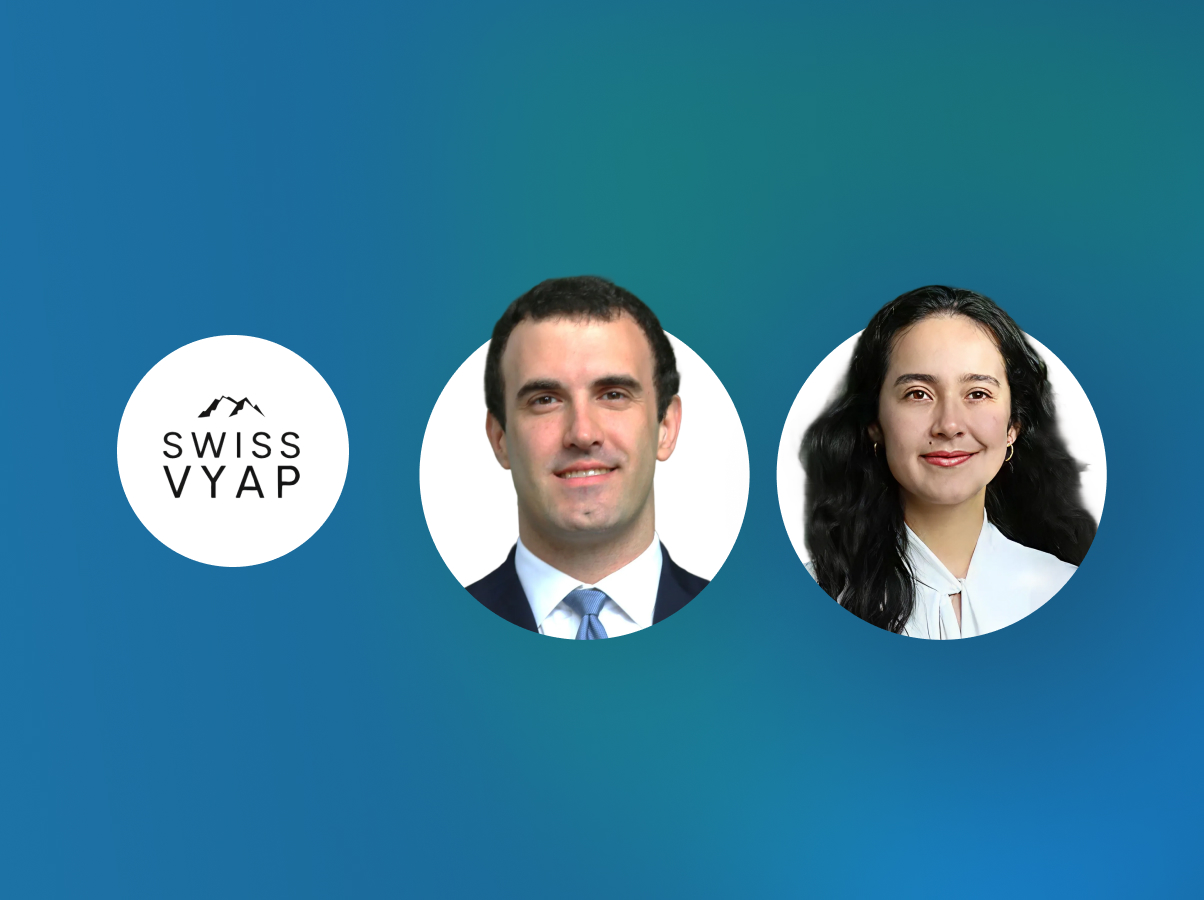
THE AUTHORS:
Horacio Risso, Argentine-qualified Lawyer
Valentina Botello León, Colombian-qualified Lawyer
This article was featured in Jus Mundi‘s 2025 Arbitration Year in Review, an annual publication analyzing arbitration developments across 40+ jurisdictions on 6 continents. This edition brings together young practitioners and senior experts to capture the year’s most significant legislative reforms, enforcement trends, and institutional innovations.
The Swiss Federal Tribunal (“SFT”) has exclusive jurisdiction over applications to set aside or review international awards issued by arbitral tribunals based in Switzerland. These matters are regulated by Articles 190 and 190a of the 2021 Swiss Private International Law Act (“PILA”). Article 190 PILA provides the setting aside of awards under the following exhaustive grounds:
- Improper constitution of the arbitral tribunal (Article 190(2)(a)).
- Wrong acceptance or decline of jurisdiction (Article 190(2)(b)).
- Rulings beyond the claims submitted to the tribunal, or failure to decide one of them (Article 190(2)(c)).
- Violation of the principle of equal treatment of the parties or of their right to be heard (Article 190(2)(d)).
- Incompatibility of the award with public policy (Article 190(2)(e)).
Article 190a PILA provides for the review of awards in limited circumstances:
- Discovery of decisive new evidence that existed before the award was issued (Article 190a(a)).
- Criminal proceedings establishing that the arbitral award was influenced by a felony or misdemeanour (Article 190a(b)).
- Discovery of a ground for challenging an arbitrator’s independence and impartiality after the conclusion of the arbitral proceedings (Article 190a(c)).
The success rate of these applications is very low. In 2025, the SFT decided [31] set aside or review applications against international arbitration awards and overturned only one —decision 4A_92/2025 — in a sports arbitration on jurisdictional grounds under Article 190(2)(b) PILA. Switzerland remains one of the most arbitration-friendly jurisdictions, among other reasons, because of its modern legislation and efficient one-instance set-aside proceedings before the SFT. Nevertheless, this year, Switzerland’s approach to international arbitration was heavily scrutinised by the European Court of Human Rights (“ECtHR”). This article provides an overview of this ECtHR decision, alongside other selected SFT decisions issued in 2025.
Application for Set-Aside Based on Wrong Decision on Jurisdiction (Article 190(2)(b))
In decision 4A_466/2023 of 6 February 2025, the SFT rejected a request to set aside the award in the case Raimundo Santamarta Devis v. Venezuela (PCA Case No. 2020-56). The arbitral tribunal was constituted under the Bilateral Investment Treaty (“BIT”) between Venezuela and Spain (1995) and declined jurisdiction on the ground of the claimant’s dual Venezuelan and Spanish nationality. The claimant then requested to set aside the award based on Article 190(2)(b) PILA.
In its judgment, the SFT reiterated its jurisprudence that, in deciding such set-aside requests, it could freely examine any legal issue that determines the arbitral tribunal’s jurisdiction. It also noted that its task was not to provide a general response on the highly debated matter of dual nationals’ protection under investment treaties, but rather to determine whether the plaintiff in this case could invoke the protections of the BIT. The SFT then highlighted that, even under this same BIT, investment tribunals have reached different conclusions in dual nationals’ cases such as Serafín García Armas and Karina García Gruber v. Venezuela, Manuel García Armas and others v. Venezuela, and Fernando Fraiz Trapote v. Venezuela.
The SFT analysed these decisions and the reasons expressed by the Santamarta tribunal. Applying the rules of interpretation of the Vienna Convention on the Law of Treaties (1969) (“VCLT”), the arbitral tribunal concluded that the BIT was ambiguous as to whether its definition of “investor” included dual nationals. Based again on the VCLT, the arbitral tribunal then referred to other international law rules that could be relevant for interpreting the BIT, specifically the customary rule of dominant and effective nationality. The tribunal held that the claimant’s dominant and effective nationality was indeed Venezuelan and that, consequently, he could not be considered a protected investor under the BIT.
The SFT considered this approach to be well-grounded. It also held that the tribunal’s determination of the claimant’s dominant and effective nationality was a matter of fact beyond the SFT’s review. Notably, the SFT distinguished this case from its 2020 decision 4A_306/2019 to set aside the Clorox v. Venezuela award, rendered under the same BIT, in which the arbitral tribunal declined jurisdiction. There, the SFT held that the arbitral tribunal’s interpretation was inconsistent with the BIT’s broad definition of the term “investment”. In contrast, in this case, the SFT stressed that the BIT did not address the specific situation of dual nationals and therefore the arbitral tribunal was correct in filling this gap.
Application for Set-Aside Due to Violation of Parties’ Right to Be Heard (Article 190(2)(d))
In decision 4A_90/2025 of 4 August 2025, the SFT confirmed a commercial arbitration award issued by an arbitral tribunal seated in Geneva. The SFT affirmed that the arbitral tribunal had not violated the claimant’s right to be heard under Article 190(2)(d) PILA by disregarding arguments and evidence that were not decisive to the outcome of the dispute.
The SFT first clarified that, when the outcome of the award is based on several independent or alternative reasons, the applicant must demonstrate that each reason is tainted by a breach of Article 190(2) PILA. If the request only covers one of the award’s several reasonings, it should be deemed inadmissible, since even if the request is granted, the award can still stand on its alternative arguments. In this case, the request was based on only one of the two arguments on which the award was based (namely, lack of fundamental breach and forfeiture of the right to terminate the contract), and therefore the SFT decided that it was inadmissible.
Nevertheless, the SFT stated that, even if it had been admissible, it would still have denied the set-aside request on the merits. The SFT recalled that the right to be heard does not imply an obligation to deal expressly with every argument or piece of evidence submitted by the parties, but only with those that are decisive for the outcome of the dispute. The SFT found that the arbitral tribunal had considered the relevant claims and evidence, respecting the parties’ right to be heard. Moreover, following its usual practice, the SFT held that the applicant was in substance seeking to reopen the arbitral proceedings under the guise of a right-to-be-heard violation, as the arguments advanced had already been rejected by the tribunal.
Application for Set-Aside Due to Public Policy Incompatibility (Article 190(2)(e) PILA)
On 10 July 2025, the Grand Chamber of the ECtHR issued its decision in the landmark case of Semenya v. Switzerland, ruling that Switzerland violated Article 6(1) of the European Convention of Human Rights (“ECHR”) when the SFT reviewed a Court of Arbitration for Sports (“CAS”) award which upheld World Athletics’ Regulations on Differences of Sex Development (“DSD”).
Semenya initiated CAS proceedings against World Athletics, arguing that the DSD Regulations were discriminatory as they required athletes with DSD conditions to undergo hormone-lowering treatment to compete in the female category. On 29 April 2019, the CAS issued its award in which it ruled that although the regulations were discriminatory, this discrimination was “necessary, reasonable and proportionate” to ensure fairness in women’s athletics. Semenya challenged the award before the SFT, affirming that she had been discriminated against based on her sexual characteristics. In its 2020 decision, the SFT dismissed the challenge, holding that the CAS award does not violate public policy under Article 190(2)(e) PILA.
Semenya then brought an application before the ECtHR alleging discriminatory treatment in violation of ECHR Articles 3(prohibition of inhuman or degrading treatment), 6(1) (right to a fair hearing) and 8 (right to respect for private life) taken alone and in conjunction with Articles 14 (prohibition of discrimination), and 13 (right to an effective remedy). Following the first ECtHR Chamber judgement of 11 July 2023, the case was referred to the ECtHR Grand Chamber. The Grand Chamber’s judgement partially upheld Switzerland’s preliminary objection and dismissed the Chamber’s earlier findings under Articles 8, 14 and 13, declining jurisdiction over those complaints. However, it retained jurisdiction over Article 6(1) holding that even though the underlying CAS award was rendered in a dispute between private parties, the case nevertheless fell within Switzerland’s “jurisdiction” under Article 1 ECHR because CAS’ arbitrations are governed by the Swiss lex arbitri and the SFT is the sole competent national court able review its awards.
The Grand Chamber emphasised that CAS arbitration is effectively mandatory and marked by a “structural imbalance” between athletes and sports federations, meaning athletes do not freely consent to CAS jurisdiction. In such non-voluntary arbitrations involving fundamental rights, Article 6(1) ECHR requires the SFT to carry out a “particularly rigorous examination” of an athlete’s application under Article 190(2)(e) PILA, considering the importance of the fundamental rights at issue. According to the Grand Chamber, the SFT’s narrow conception of substantive public policy and limited scrutiny of proportionality fell short of this standard, resulting in a violation of Article 6(1) ECHR.
The Grand Chamber’s judgment thus introduces, for the first time, a requirement that the SFT apply a “particularly rigorous examination” where CAS jurisdiction has been imposed on an athlete, and the dispute concerns fundamental rights. Although criticized in a joint dissent as a novel and potentially far-reaching standard, its precise contours remain undefined. One foreseeable implication is that the SFT may need to broaden its interpretation of substantive public policy when fundamental rights are invoked under Article 190(2)(e) PILA. While the ECtHR did not expressly confine its reasoning to sports arbitration, the judgment repeatedly stresses the structural imbalance and the non-voluntary nature of CAS proceedings, suggesting an implicit distinction between standard commercial arbitration and the “vertical” relationship that characterizes sports arbitration.
Application for Review Based on Subsequently Discovered Evidence (Article 190a(A))
In decision 4A_46/2024 of 17 April 2025, the STF rejected China’s request for review of the award in the Jason Yu Song v. People’s Republic of China case (PCA Case No. 2019-39) brought by a British investor under the UK-China BIT (1986). China brought its application under Article 190a(a) PILA, arguing that it had found new evidence that would have led the arbitral tribunal to decline jurisdiction. The alleged new evidence consisted of:
- A 2012 email sent by the investor;
- A 2012 document; and
- An October 2023 confession by one of the investor’s witnesses admitting that his earlier testimony in the arbitration had been untruthful.
China submitted that this evidence would have shown that the investor had acquired his shares in the relevant company illegally and that he had obtained his British citizenship solely for the purpose of commencing the arbitration, and that the tribunal would have therefore declined jurisdiction.
The SFT recalled that, under Article 190a PILA, a request for review must be submitted within 90 days of discovering the grounds for review. The SFT ruled that China had failed to do so with respect to the 2012 email and document. China alleged that it had not had access to them until December 2023, but according to the SFT, it did not provide any supporting evidence or further details on the discovery and thus did not discharge its burden. As to the 2023 confession, the SFT held that under Article 190a(a), the newly discovered evidence should have existed prior to the issuance of the award under review. In this case, China obtained the confession almost two years after the issuance of the award in December 2021. The SFT therefore concluded that this evidence was also inadmissible. Separately, in its decision 4A_528/2024 of 26 June 2025, the SFT rejected a subsequent request for review filed by China against the same award.
Takeaways
In 2025, the SFT received fewer applications relating to arbitral awards than in previous years, and the success rate remained low. Indeed, the cases analysed in this article show that the SFT has a high threshold for the admissibility of any request to set aside or review an award and confirm its deference to arbitral tribunals. The Semenya judgment, appears to require the SFT to conduct a “particularly rigorous examination” when reviewing CAS awards in cases involving compulsory arbitration and fundamental rights. How this development will affect the SFT’s pro-arbitration approach remains to be seen. Given that a significant portion of the SFT’s international arbitration caseload concerns sports arbitration, cases in 2026 will show whether this precedent prompts a broader interpretation of public policy under Article 190(2)(e) PILA.
Discover more insights into the latest developments in arbitration in 2025 from around the world now
ABOUT THE AUTHORS
Horacio Risso is an Argentine-qualified lawyer with a law degree from the University of Buenos Aires and an LL.M. in International Disputes Settlement (“MIDS”) from the Graduate Institute of International and Development Studies and the University of Geneva. Having worked in Dechamps International Law (Buenos Aires) and Lévy Kaufmann-Kohler (Geneva), Horacio has more than five years of experience in international commercial and investment arbitration. He is fluent in Spanish and English and has an intermediate level of French and Italian.
Valentina Botello León is a Colombian-qualified lawyer with experience in the Ministry of Trade of Colombia, leading investment arbitration law firms as Lévy Kaufmann-Kohler (Geneva) and Álvarez Zárate & Asociados (Bogotá), as well as the Advisory Centre in WTO Law (Geneva). She holds a Bachelor of Laws from the Universidad Externado de Colombia, a Master 1 in International Law and a Master 2 in Public International Law from the Université Paris II Panthéon-Assas, and an LL.M. in International Dispute Settlement (“MIDS”) from the Graduate Institute of International and Development Studies and the University of Geneva. She is fluent in Spanish, English, French, and Portuguese.
*The views and opinions expressed by authors are theirs and do not necessarily reflect those of their organizations, employers, or Daily Jus, Jus Mundi, or Jus Connect.